


Frequently Asked Questions
Have questions about your home energy upgrade? Our FAQs give quick, clear answers to help you understand the KORE Retrofit process and what to expect along your One Stop Shop journey.

Your One Stop Shop for General FAQs
-
A One Stop Shop (OSS) is a fully managed home energy upgrade service approved by SEAI that handles every stage of your retrofit from start to finish. Instead of coordinating multiple contractors, managing documents, or applying for grants yourself, a One Stop Shop takes care of the entire process on your behalf. This makes deep retrofitting simpler, faster, and far less stressful for homeowners.
-
A registered One Stop Shop provides a complete package of services, including:
Home Energy Assessment to determine the upgrades your home needs
Design and planning of your retrofit roadmap
SEAI grant application and administration, with grants deducted upfront
Qualified contractor coordination and project supervision
Completion of all upgrade works to meet SEAI standards
Final BER certification after works are complete
Why Homeowners Choose a One Stop Shop
Upfront grant deduction — no waiting for refunds
End‑to‑end project management
Single point of contact
Quality‑assured installation by SEAI‑approved experts
A faster path to achieving a B2 BER or better
Put simply, a One Stop Shop is your all‑in‑one partner for a warmer, more efficient home—managing everything from the first assessment to the final BER so you don’t have to.
-
To qualify for SEAI grant funding through a One Stop Shop, your home must meet a number of key eligibility criteria. These requirements ensure that the property is suitable for a full home energy upgrade and capable of reaching the minimum energy‑efficiency standard. Homeowners must meet the following conditions to qualify:
Your home must be built before 2011. It must have been constructed and occupied before 31 December 2010.
Your current BER must be B3 or lower before works begin.
Your upgrade must be capable of reaching at least a B2 BER with a minimum 100 kWh/m²/year improvement in energy performance. (This requirement has been relaxed if you install a heat pump as part of the works)
You must complete a Home Energy Assessment (HEA) before applying.
You must complete at least two energy‑upgrade measures (e.g., insulation + heat pump). Single‑measure upgrades are not eligible under the OSS route
All works must be carried out by an SEAI‑registered One Stop Shop provider, using SEAI‑approved contractors.
You must not have previously claimed grants for the same measures in earlier upgrade projects.
The uplift requirement will be lifted for those installing a heat pump as part of the works.
Grant levels depend on the number and type of measures included.
-
The maximum grant amounts available under the scheme are:
Heat Pump Systems
All houses: €6,500
Apartments: €4,500
Central Heating System for Heat Pump
All houses: €2,000
Apartments: €1,000
Heat Pump – Air to Air
€3,500
Heating Controls
€700
Renewable Heating System Bonus
€4,000
Solar Hot Water
€1,200
Attic Insulation
Apartment: €1,100
Mid‑Terrace: €1,400
Semi‑Detached / End‑Terrace: €1,500
Detached: €2,000
Rafter Insulation
Apartment: €1,500
Mid‑Terrace: €2,000
Semi‑Detached / End‑Terrace: €3,000
Detached: €3,000
Cavity Wall Insulation
Apartment: €700
Mid‑Terrace: €850
Semi‑Detached / End‑Terrace: €1,300
Detached: €1,800
Internal Wall Insulation (Dry Lining)
Apartment: €1,500
Mid‑Terrace: €2,000
Semi‑Detached / End‑Terrace: €3,500
Detached: €4,500
External Wall Insulation (The Wrap)
Apartment: €3,000
Mid‑Terrace: €3,500
Semi‑Detached / End‑Terrace: €6,000
Detached: €8,000
Windows (Complete Upgrade)
Apartment: €1,500
Mid‑Terrace: €1,800
Semi‑Detached / End‑Terrace: €3,000
Detached: €4,000
External Doors (max 2)
€800 per door
Floor Insulation
€3,500
Solar PV
€700 per kWp up to 2kWp
€1400 for 2kWp solar panels
€1600 for 3kWp solar panels
€1800 for 4kWp solar panels
Total grant capped at €1800
Mechanical Ventilation
€1,500
Air Tightness
€1,000
Home Energy Assessment
€350
Project Management
Apartment: €800
Mid‑Terrace: €1,200
Semi‑Detached / End‑Terrace: €1,600
Detached: €2,000
Most detached homes qualify for €38,900 as of March 2026.
-
Choosing KORE Retrofit gives homeowners a simpler, more efficient, and fully managed pathway to upgrading their home’s energy performance. Unlike individual grants, where you must manage applications, contractors, timelines, and quality control, KORE Retrofit handles the entire process from start to finish, ensuring a smoother experience and a better overall result.
Key reasons to choose KORE Retrofit:
Full project management
KORE Retrofit coordinates everything on your behalf, including the Home Energy Assessment, grant applications, contractor coordination, on‑site works, and your final BER certification.Upfront grant deduction
SEAI grants are automatically deducted from your quotation, so you only pay the reduced cost, no separate paperwork or waiting for reimbursement.Access to a wider range of grants
KORE Retrofit unlocks more upgrade options than individual grants alone, including windows, doors, project management support, and combined energy‑upgrade packages.High‑quality, audited contractors
All works are completed by SEAI‑approved and regularly audited contractors, ensuring quality, compliance, and long‑term performance.Whole‑home energy strategy
Instead of piecemeal upgrades, KORE Retrofit designs a complete plan to help your home reach a B2 BER or better, ensuring all measures work together for maximum energy savings.Minimal hassle for homeowners
With KORE Retrofit as your single point of contact, you avoid managing multiple trades, grant forms, timelines, or technical requirements.Better overall value
Homeowners can access significantly higher total grant values when completing multiple upgrades together—something only possible through the KORE Retrofit pathway.
Contact our team of retrofit experts today to learn more.
-
Yes. A Home Energy Assessment determines your home’s current BER, identifies upgrade options, and confirms whether your property can reach the required B2 rating.
We can arrange the Home Energy Assessment after your initial phone consultation.
-
A Home Energy Assessment is a detailed examination of how your home uses and loses energy. It gives you a clear roadmap of the upgrades needed to improve comfort, reduce bills, and meet SEAI grant requirements.
During your Home Energy Assessment, a qualified assessor will:
Carry out a full BER assessment
Inspect your insulation, ventilation, windows, doors, floors, and roof
Review your existing heating system and overall energy performance
Calculate your Heat Loss Indicator (HLI)
Complete a heat pump technical assessment (if relevant)
Identify heat‑loss problem areas throughout the home
Recommend the upgrades needed to reach a B2 BER or better
Provide indicative cost estimates and available SEAI grant amounts
Prepare your personalised Home Energy Assessment Report and retrofit roadmap
This report becomes the foundation of your retrofit journey and helps ensure that every upgrade is planned in the right order for the best results.
-
Once your Home Energy Assessment is complete, your retrofit journey moves into the planning and decision stage. You are not expected to commit to anything immediately, the report simply gives you clarity so you can make informed choices.
Here’s what happens next:
You receive your full Home Energy Assessment Report
This includes your current BER rating, heat‑loss findings, HLI, recommended upgrades and an outline of how your home can reach a B2 BER or better.Your results are reviewed with you
A KORE Retrofit advisor will explain the findings in plain language, outline your upgrade options, and answer any questions you may have.Your SEAI grant options are confirmed
Based on your home’s condition and recommended upgrades, we explain which grants you may qualify for and how much funding is available.You decide if you’d like to move forward
There is no obligation. You can take your time to review the recommended upgrades and the potential benefits.A detailed quotation is prepared
If you choose to proceed, a retrofit coordinator will arrange a home survey, gather measurements and prepare a full proposal and itemised quotation.KORE Retrofit handles the grant application
Once you approve the proposal, we submit your SEAI grant application on your behalf and guide you through the remaining steps.
Your Home Energy Assessment is simply the foundation. After that, KORE Retrofit supports you through each stage of the upgrade journey!
-
We’re happy to work with a contractor of your choosing, or we can provide one for you.
Under the KORE Retrofit One Stop Shop service, all grant‑supported retrofit works must be carried out by SEAI‑approved contractors who meet strict quality, compliance, and certification standards. This ensures your upgrades are installed correctly and qualify for SEAI funding.
You may use your own builder for general building or renovation works, but for grant‑eligible energy upgrades, your contractor must meet SEAI requirements and work within the KORE Retrofit process.
In summary:
You can use your own builder for non‑retrofit works (extensions, renovations, etc.)
You may use your own builder for retrofit measures only if they meet SEAI standards and can provide the required certification
Most homeowners choose a KORE‑approved contractor to ensure smooth delivery, compliance, and quicker grant approval
If you’re unsure whether your contractor qualifies, our team can guide you through the requirements.
-
Yes. Extensions or major renovations can be included alongside your energy‑upgrade project, but they are treated separately.
KORE Retrofit focuses on managing and delivering the SEAI‑grant‑eligible retrofit works, while your extension or renovation is carried out by your chosen builder. Both can run together as one overall project, but each part must follow its own process.
Here’s how it works:
You can use your own builder for extensions, refurbishments or non‑grant works
KORE Retrofit manages only the energy‑upgrade portion (e.g., insulation, heat pumps, windows, ventilation, airtightness)
Both sets of works can be coordinated to avoid delays
All grant‑eligible measures must be completed to SEAI standards and certified accordingly
In short:
Yes — you can absolutely include extensions or major renovations, but they sit alongside (not inside) the grant‑funded retrofit package.
Your One Stop Shop for Finance FAQs
-
The average cost of a One Stop Shop retrofit for a detached house is typically around €70,000 before grants. With SEAI funding applied, the average cost to the homeowner is approximately €44,000.
Costs vary depending on the home’s age, size, condition, and the number of upgrade measures included (such as insulation, windows, heat pump, ventilation, and solar PV). Detached homes usually require more work due to their larger external surface area, which means a greater potential for heat loss — and therefore greater potential for improvement.
This figure is based on national median data for full retrofit projects across Ireland and represents a typical whole‑home upgrade targeting a minimum B2 BER rating.
The average cost of a One Stop Shop retrofit for a semi‑detached home is typically around €59,000 before grants. After SEAI support is applied, the average homeowner pays approximately €38,000.
Semi‑detached homes usually require a broad mix of upgrades, insulation, windows, a heat pump, ventilation, and potentially solar PV, to meet the required B2 BER uplift. Costs sit between terraced and detached homes due to their size and heat‑loss profile.
The average cost of a One Stop Shop retrofit for a terraced home is typically just over €54,000 before grants. With SEAI funding applied, the average cost to the homeowner is around €36,000.
Terraced homes tend to be more energy‑efficient to begin with due to having fewer exposed external walls, which helps keep overall upgrade costs slightly lower. Typical measures include insulation, heat pump installation, windows, ventilation, and sometimes solar PV, all working together to reach a B2 BER or better.
Remember that these are just average costs. Your project may cost more or less than the average depending on the size of the home, the measures you choose to install, and any renovations or extensions included at the same time.
-
No. You don’t have to pay for everything upfront.
With KORE Retrofit, the cost of your project is broken into stages to make the process more manageable. Grant funding is also deducted upfront, meaning you only pay the balance after grants are applied.
Typically, payments happen in stages:
Initial payment for your Home Energy Assessment
If proceeding with works: The grant is deducted up front
Stage payments: Typically, two payments throughout the course of works
This staged approach ensures transparency and allows you to spread costs throughout the project rather than paying in one lump sum.
If you need additional support, you may also be able to access the Home Energy Upgrade Loan Scheme for low‑cost financing.
-
The Home Energy Upgrade Loan Scheme is a Government‑backed, low‑cost loan designed to make home energy upgrades more affordable for homeowners. It works alongside SEAI grants and helps you finance the portion of your project that isn’t covered by grant funding.
Key features of the loan scheme:
Low‑cost, Government‑backed finance to support energy‑efficient upgrades
Borrow €5,000 to €75,000 per property (up to 3 properties)
Unsecured loan: no charge over your home, unlike a mortgage
Flexible repayment terms from 1 to 10 years
Loans can be drawn down before works begin, helping with deposits and early-stage payments
At least 75% of the loan must be spent on energy upgrades
Up to 25% can go toward related home improvement costs (e.g., painting, flooring after works)
Available only when completing upgrades that qualify for SEAI grant funding
What can it be used for?
The loan can fund almost all upgrade measures included in your retrofit project, such as insulation, heat pumps, ventilation, airtightness, windows, doors, and solar PV (when part of a deeper retrofit).
How it works with KORE Retrofit:
You complete your Home Energy Assessment
KORE Retrofit provides your Home Energy Summary Report, required by lenders
You apply to a participating bank or credit union
Once approved, you receive the loan upfront and can proceed with your retrofit
This scheme helps homeowners spread costs, reduce upfront financial pressure, and make retrofit projects far more accessible.
-
Yes. You can finance between €5,000 and €75,000 per property, with a limit of three properties total. The maximum amount you can finance for three properties is €225,000.
Note that this limit only applies to the Home Energy Upgrade Loan Scheme. There may be alternative finance options available that offer higher limits.
-
As of March 2026, you can apply through:
AIB
An Post Money
Bank of Ireland
Clonmel Credit Union
Connect Credit Union
FirstSouth Credit Union
Listowel Credit Union
Naomh Breandan Credit Union
North Midlands Credit Union
Progressive Credit Union
ptsb
-
The interest rate varies by finance provider and may be based on its underwriting criteria and your creditworthiness. Please speak directly to your preferred finance provider for more information on current interest rates.
Your One Stop Shop for EnerPHit FAQs
-
Yes. KORE Retrofit has the specialist expertise to design and deliver projects to EnerPHit (Passive House retrofit) and Passive House standards.
We have multiple EnerPHit projects already completed or in progress, along with certified Passive House retrofits. Our team includes specialists trained in airtightness, thermal‑bridge elimination, advanced insulation systems, and Passive House design methodologies.These high‑performance projects can be integrated into the One Stop Shop process, combining SEAI‑funded measures with the enhanced specifications required for EnerPHit or Passive House performance.
If you’re planning a deep retrofit and want to explore EnerPHit or Passive House as a target, our technical team can guide you through feasibility, design, certification pathways, and upgrade requirements.
-
EnerPHit‑level retrofitting transforms existing homes into high‑performance, ultra‑efficient buildings that deliver exceptional comfort, dramatically lower energy bills and long‑term resilience. By combining airtightness, high‑quality insulation, thermal bridge elimination, triple‑glazed windows, MVHR ventilation and renewable energy integration, EnerPHit reduces heating demand by up to 90% and creates healthier, quieter, more durable homes. As demonstrated by KORE Retrofit’s certified Passive House EnerPHit projects, homeowners can achieve A‑rated performance, substantial cost savings and a future‑proofed home built to the world’s most rigorous retrofit standard.
-
Yes. Passive House and EnerPHit retrofit projects can qualify for SEAI grants, provided the works meet the criteria of the applicable SEAI schemes, such as the One Stop Shop programme. SEAI grants are awarded based on the energy upgrades installed (insulation, airtightness, ventilation, heat pumps, windows, solar PV, etc.), not the certification pathway itself, meaning homeowners aiming for the Passive House or EnerPHit standard can still access the same grant supports as any deep retrofit project.
KORE Retrofit’s Passive House and EnerPHit projects, for example, certified upgrades achieving A‑rated BER performance and ultra‑low energy consumption, are delivered through SEAI‑approved measures, allowing homeowners to combine the Passive House methodology with maximised grant funding under the One Stop Shop scheme.
-
A PHPP (Passive House Planning Package) is a specialised energy‑modelling software used to design and verify Passive House and EnerPHit retrofit projects. It calculates a building’s heating demand, cooling load, airtightness, ventilation performance, thermal bridge impacts and renewable energy contributions with a high degree of accuracy. Because Passive House certification is performance‑based, the PHPP is required to prove that a home will actually meet the ultra‑low‑energy criteria before construction begins. It also helps homeowners and designers optimise insulation levels, window performance, airtightness strategies and ventilation systems, ensuring cost‑effective decisions and predictable real‑world outcomes. For EnerPHit‑level retrofits, the PHPP is essential for demonstrating that deep‑energy‑upgrade measures will achieve the required efficiency targets and long‑term comfort, making it a critical quality‑assurance tool in any Passive House project.
-
You do not have to certify your home to Passive House or EnerPHit standards, but certification provides the highest level of quality assurance and proves that your retrofit has met the world’s most rigorous performance benchmarks. The standards themselves are voluntary, meaning homeowners can follow Passive House principles, such as superior insulation, airtightness, high‑performance glazing and mechanical ventilation, without pursuing formal certification. However, full certification offers verified proof of energy performance, comfort and build quality, which is especially valuable for resale, long‑term performance monitoring and ensuring your retrofit meets its designed energy savings.
KORE Retrofit regularly delivers certified Passive House and EnerPHit projects, demonstrating the exceptional results possible when homes are upgraded to these internationally recognised levels.
-
A Passive House or EnerPHit‑level retrofit reduces your home’s annual energy requirements to a fraction of what a typical Irish home uses, thanks to dramatic improvements in insulation, airtightness, thermal‑bridge elimination, ventilation efficiency and renewable energy integration. KORE Retrofit’s own certified EnerPHit projects show heating demand dropping to as low as 10–21 kWh/m² per year, with overall energy consumption reduced from typical pre‑retrofit levels (often exceeding 289–405 kWh/m²/yr) to A‑rated performance around 23 kWh/m²/yr.
In real‑world terms, this can cut annual energy costs from several thousand euro to well under €600–€2,000, even lower when solar PV is included.
These ultra‑low energy requirements mean your home stays warm, comfortable and affordable to run year‑round, with predictable long‑term savings and exceptional indoor comfort backed by measurable, certified performance.
Your One Stop Shop for Traditional Homes FAQs
-
The SEAI Traditional Homes Pilot Scheme is a specialised retrofit programme designed to help owners of older, traditionally constructed homes improve energy efficiency while preserving the building’s character.
The scheme offers tailored grant support for measures like insulation, ventilation, renewable heating and fabric upgrades that are appropriate for heritage structures.
As a participating One Stop Shop, KORE Retrofit guides homeowners through eligibility, assessment, grant applications and upgrade delivery to ensure high‑quality, heritage‑sensitive results.
-
A traditionally constructed home is typically pre‑1940 and built using solid masonry walls, breathable materials, timber windows, natural ventilation and construction methods that differ from modern cavity‑wall building practices. These homes often have minimal insulation, higher heat loss and specific conservation considerations. If you’re unsure, KORE Retrofit and conservation professionals can help assess your property’s age, construction type and suitability for the Traditional Homes Pilot Scheme.
-
Yes. With the right fabric‑first approach, many traditional homes can achieve a B2 BER rating or better, even with heritage constraints. KORE’s project experience shows that deep retrofit measures such as breathable insulation, airtightness improvements, high‑performance glazing and efficient heating systems can significantly boost BER performance while respecting the building’s historic fabric.
In some cases, where full upgrades aren’t appropriate, the scheme allows for alternative pathways that still deliver substantial energy savings and improved comfort.
-
KORE Retrofit works closely with Traditional Building Professionals and conservation specialists to design retrofit solutions that protect the home’s architectural character. This includes using breathable materials, moisture‑appropriate insulation systems, minimally invasive techniques and retrofit details that preserve original features. Every project is approached with a balance of energy efficiency, building health and heritage conservation to ensure upgrades enhance, not compromise, the structure.
-
The Conservation Advice Scheme provides homeowners of vacant or traditionally constructed buildings with a conservation report prepared by an accredited professional. This report outlines the building’s condition, risks, repair needs and recommendations for sensitive energy upgrades. It is ideal for owners of older farmhouses, historic homes or neglected buildings who want expert guidance before planning improvements or applying for grants.
Grant funding of up to €5,000 is available.
-
While not always mandatory for every SEAI scheme, a conservation report is highly recommended, and required for some programmes such as the Conservation Advice Scheme and certain Traditional Homes Pilot applications. The report helps ensure that any proposed retrofit work aligns with best conservation practice, avoids fabric damage and meets the standards expected by grant bodies. It is also valuable for planning sequencing, budgeting and prioritising works safely and effectively.
-
Yes. KORE Retrofit frequently collaborates with Traditional Building Professionals, conservation architects, structural engineers and heritage consultants. These partnerships ensure that each retrofit is designed with technical accuracy, fabric sensitivity and compliance with heritage guidelines. Whether you already have a conservation professional engaged or need help finding one, KORE can integrate them into the project workflow to deliver a balanced, high‑quality outcome.
-
Suitable upgrades typically include breathable wall insulation, roof and floor insulation, airtightness improvements, high‑performance heritage‑appropriate windows, ventilation systems and renewable heating solutions. These upgrades are specifically chosen to improve comfort and efficiency while preserving the building’s original character.
-
Yes. Because traditional buildings rely on breathable construction, the type and thickness of insulation must be carefully selected. Breathable internal or external wall insulation systems are used to prevent moisture issues. A conservation specialist or Traditional Building Professional will advise on the safest insulation strategy for your home.
-
Retrofits under the Traditional Homes Pilot Scheme are carefully designed to protect and preserve your home’s architectural character. Upgrades are completed using heritage‑appropriate methods and materials, ensuring your home maintains its original look while benefiting from modern energy performance improvements.
-
Yes. Traditional homes can benefit from renewable energy solutions such as heat pumps and solar PV, provided they are integrated in a way that respects the building fabric and moisture behaviour. The pilot scheme helps determine what technologies are suitable and safe for your property.
Our Home Energy Upgrade and Retrofit Services
-

Home Energy Upgrades
KORE Retrofit’s One Stop Shop is the ideal scheme to improve the energy efficiency of your home. We offer a network of energy upgrade specialist contractors that install a wide range of energy upgrades, including heat pumps, mechanical ventilation, insulation, solar PV, windows and doors, air tightness measures and more.
-

Home Extensions
Planning on adding an extension to your home? As part of the One Stop Shop service, KORE Retrofit offers a network of specialist building contractors that can assist with home extensions both big and small. We can also work directly with your chosen architect and engineer. Speak with our retrofit team today to learn more.
-

Building Renovation & Deep Retrofit
Why not make your current home your dream home? If you are renovating your home along with energy upgrades, KORE Retrofit offers a network of specialist building contractors that can help! In addition, we can work with your current architect and engineer. Common renovations include kitchen renovations, bathroom upgrades and attic conversions.
Retrofitting Homes Across Ireland
-
![A beautifully renovated kitchen in Carndonagh, Co. Donegal, showcasing the results of a comprehensive home energy upgrade by KORE Retrofit.]()
"I Couldn't Believe It" - Carndonagh, Co. Donegal
See how our client Sally in Carndonagh, Co. Donegal, achieved her dream home through a comprehensive energy upgrade with KORE Retrofit. The renovation not only modernized their kitchen but also significantly improved the home's energy efficiency, resulting in lower energy costs and a warm comfortable home.
-
![Georgina Culshaw standing in her newly renovated kitchen in Terenure, sharing her positive experience with KORE Retrofit's comprehensive home energy upgrade.]()
"The Home of Our Dreams" - Terenure, Co. Dublin
Georgina's home in Terenure was transformed by a comprehensive home energy upgrade and renovation, resulting in a more energy-efficient living space and reduced energy costs for her.and her family.
-
!["A home in Enfield that underwent a comprehensive energy upgrade with KORE Retrofit, resulting in a modern, energy-efficient exterior."]()
"Seamless & Easy" - Enfield, Co. Meath
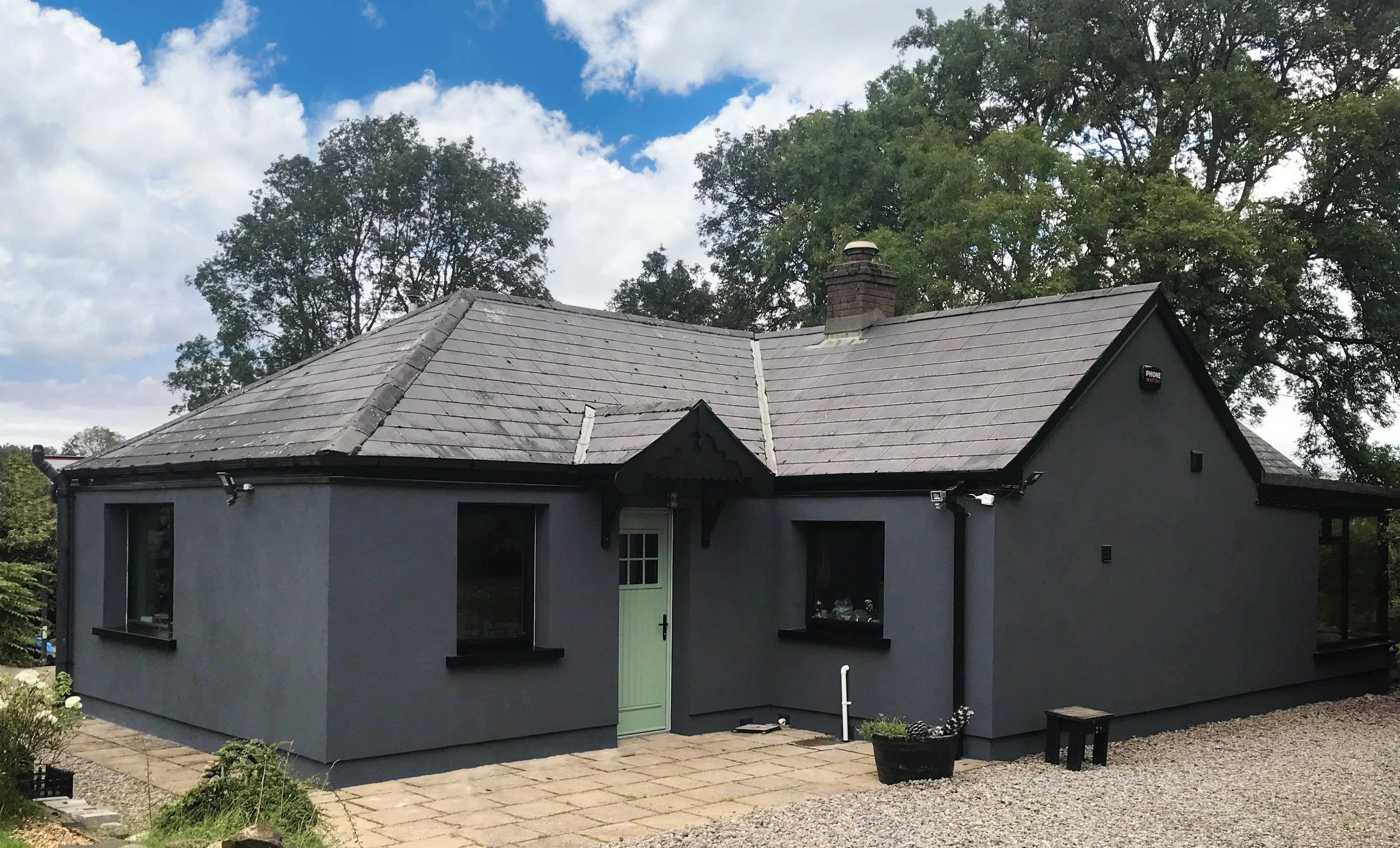
Learn how our client in Enfield experienced a seamless and easy home energy upgrade with KORE Retrofit. The comprehensive renovation significantly enhanced the home's energy efficiency and modernised its exterior, resulting in lower energy costs and improved comfort.
-
![A satisfied homeowner in Ballyjamesduff standing in front of his newly upgraded, energy-efficient home, highlighting the success of KORE Retrofit's home energy upgrade.]()
"A Warm, Comfortable Home" - Ballyjamesduff, Co. Cavan
Discover how our client Declan in Ballyjamesduff achieved a warm, comfortable home through a comprehensive energy upgrade with KORE Retrofit. The renovation significantly improved the home's energy efficiency, resulting in lower energy costs and enhanced comfort.




Book a retrofit consultation for free and see if it’s right for you.
There’s no commitment, pressure, or obligation.
